
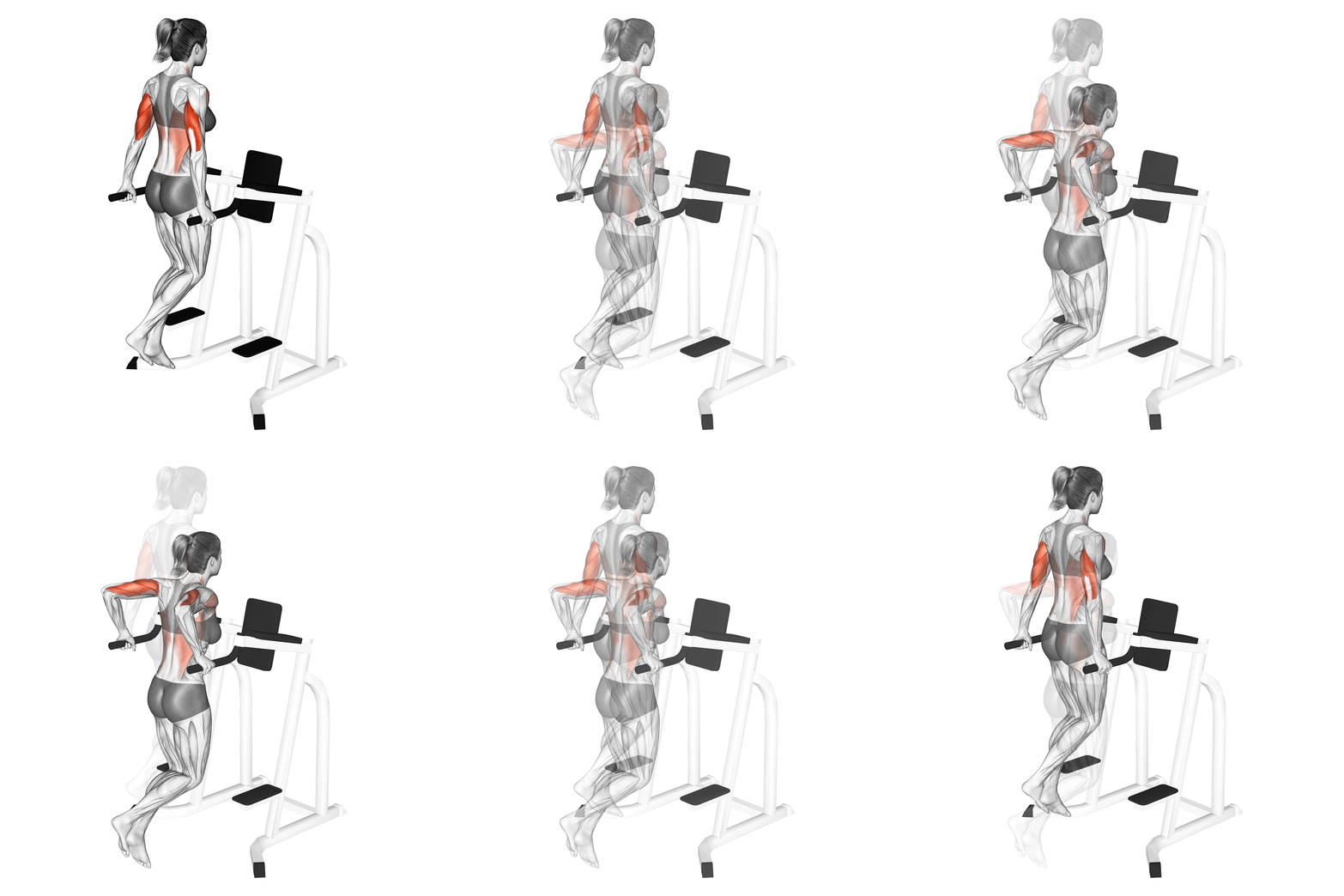
What is a Dip?
A dip is an upper body compound movement primarily performed so as to train the push muscles. It is traditionally performed with only bodyweight resistance and a pair of suspended bars, but can also be weighted if needed.
The dip is as effective a push exercise as it is impressive to watch.
Like many other traditionally bodyweight exercises, numerous progressions and variations of the dip have been developed over the years. This can make pinning down the right one difficult for first-time workout planners.
At the beginning of your training career, the assisted and conventional dip are all you need. More advanced variations like the Korean dip or planche dip are better left for when you’ve truly mastered proper dip mechanics.
What is a Dip?
A dip is an upper body compound movement primarily performed so as to train the push muscles. It is traditionally performed with only bodyweight resistance and a pair of suspended bars, but can also be weighted if needed.
Dips are considered to be a more advanced counterpart to the push-up in bodyweight training disciplines. Generally, they will require the lifter to have an already-established level of upper body strength in order to perform them correctly.
The majority of dip variations simply change the position of the hands and arms in relation to the body. This alters what sort of muscles are emphasized by the exercise.
The dip is as effective a push exercise as it is impressive to watch.
Like many other traditionally bodyweight exercises, numerous progressions and variations of the dip have been developed over the years. This can make pinning down the right one difficult for first-time workout planners.
At the beginning of your training career, the assisted and conventional dip are all you need. More advanced variations like the Korean dip or planche dip are better left for when you’ve truly mastered proper dip mechanics.
What is a Dip?
A dip is an upper body compound movement primarily performed so as to train the push muscles. It is traditionally performed with only bodyweight resistance and a pair of suspended bars, but can also be weighted if needed.

Dips are considered to be a more advanced counterpart to the push-up in bodyweight training disciplines. Generally, they will require the lifter to have an already-established level of upper body strength in order to perform them correctly.
The majority of dip variations simply change the position of the hands and arms in relation to the body. This alters what sort of muscles are emphasized by the exercise.
Dip Variations
1. The Conventional Dip
The conventional dip (AKA the dip bar dip) is the quintessential form of dip, requiring the lifter to suspend themselves between a set of parallel bars as they “dip” their body downwards.

As will be the case with all other dip variations, the conventional chest dip is a multi-joint compound exercise performed so as to target the muscles of the chest, arms and shoulders.
Equipment Needed
Conventional dips traditionally only require a pair of parallel bars. However, they can be made more challenging with the addition of wearable weights, a dip belt or a resistance band.
Muscles Worked
The conventional dip will work the pectorals, triceps brachii and deltoids to a moderately intense fashion. In addition, the core is also recruited isometrically.
Benefits as a Dip Variation
The conventional dip is considered to be the baseline dip exercise, and should be the first dip variation a novice masters prior to attempting more complex variations.
As far as dip variants go, the conventional dip is as simple as it gets, and is an all-around effective muscle builder of the upper body.